Nikolai Pavlovich Perosio (1819-1877)
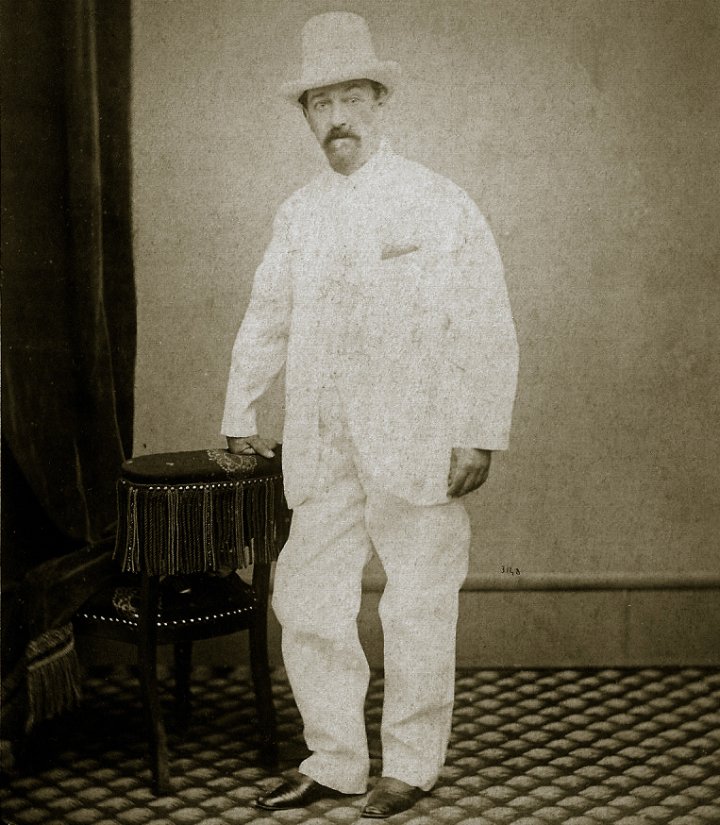
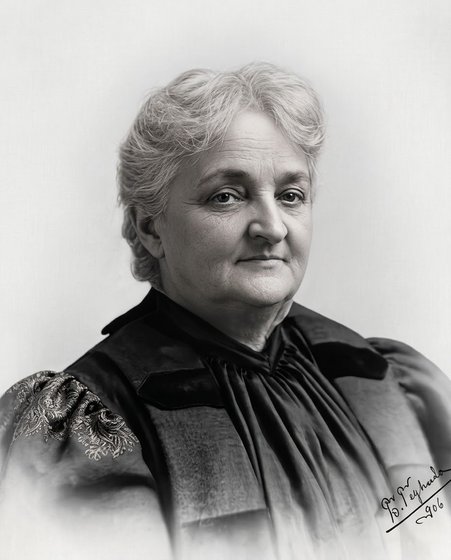
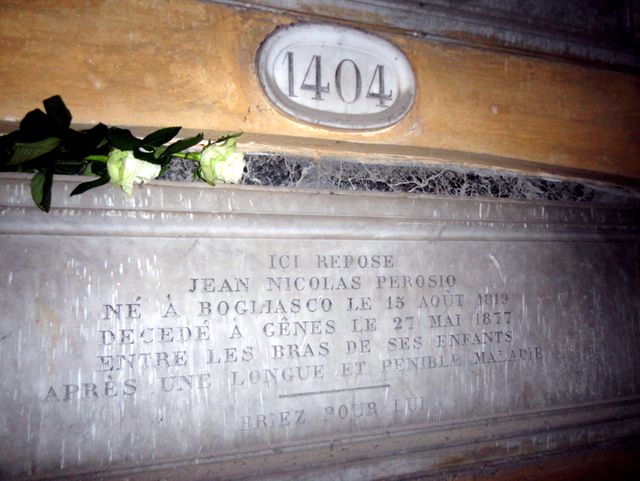
Nikolai Pavlovich Perosio was born in Bogliasco on 15 August 1819 and died in Genoa on 27 May 1877.
The Russian Biographical Dictionary, first edited by A. A. Polovtsov, is the great national biographical encyclopaedia of the Russian Empire, published by the Imperial Historical Society between 1896 and 1918.
The fact that the son of a Genoese emigrant appears in it shows that a Perosio was regarded as a public figure of national standing.
He was a renowned writer on economic subjects, a contributor to major Saint Petersburg newspapers, a language teacher, and the manager of celebrated estates and of pioneering enterprises in Tsarist Russia. According to family tradition, he was also a friend of Dostoevsky, Tolstoy and Leskov.
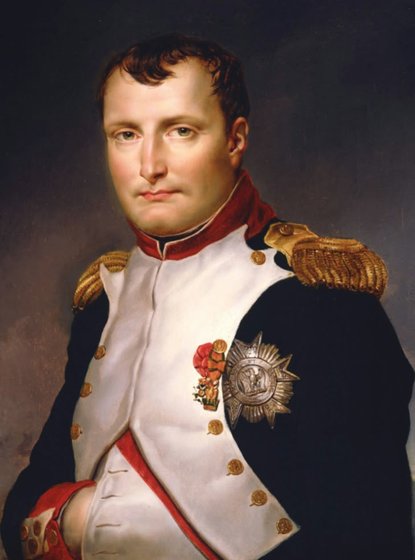
His father, Paolo Perosio, had emigrated from Bogliasco to Odessa at the dawn of the 19th century, after the Napoleonic invasion; there he was a stockbroker and landowner.
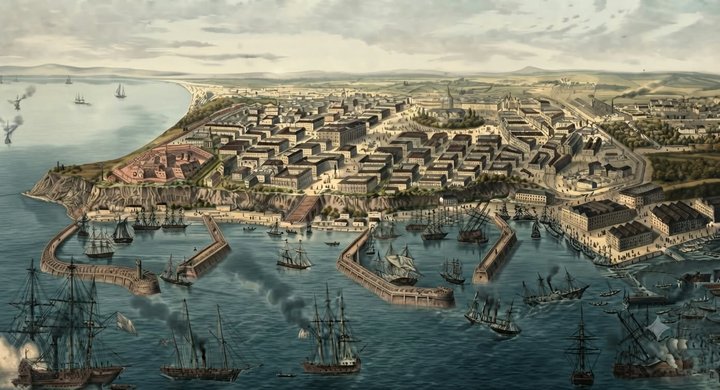
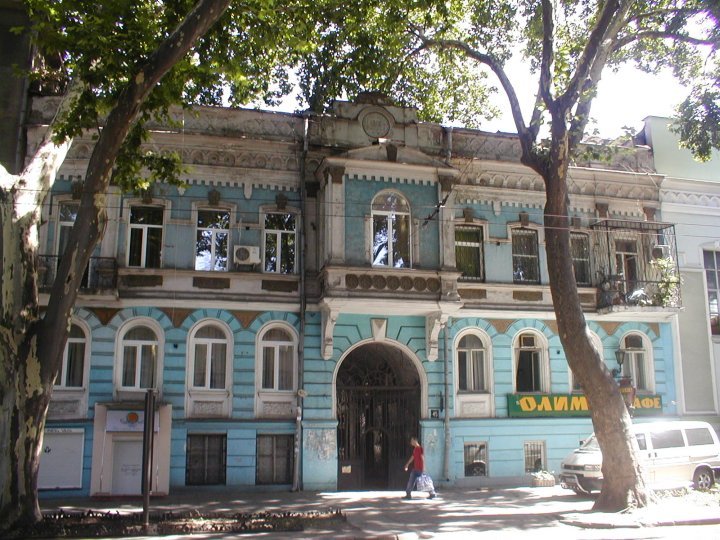
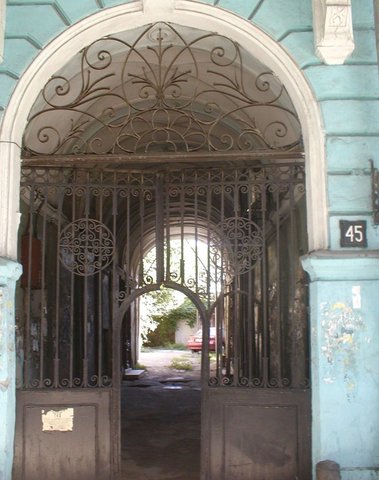
The family owned a tenement house in Odessa, built in the mid-1840s by the architect K. I. Dallaqua, which still stands at 45 Pushkinskaya Street.
After graduating from the Richelieu Lyceum in Odessa, named after the Duke of Richelieu, he became a teacher at a very young age and, later, the manager of the estate of Prince Lev Viktorovich Kochubey, son of the Chancellor of the Russian Empire, Viktor Pavlovich Kochubey (1768-1834).
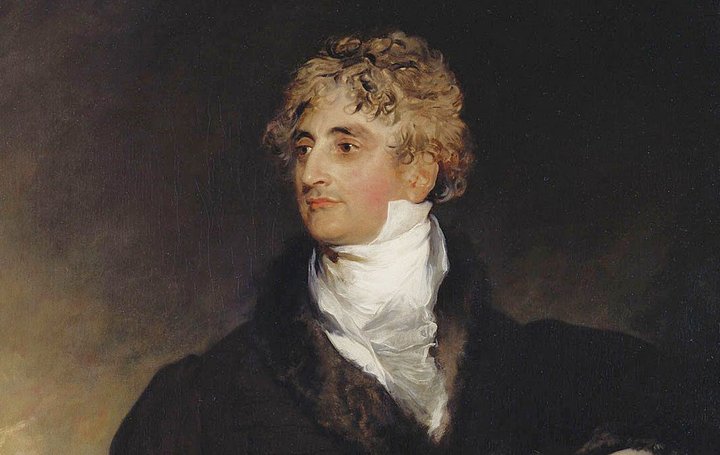
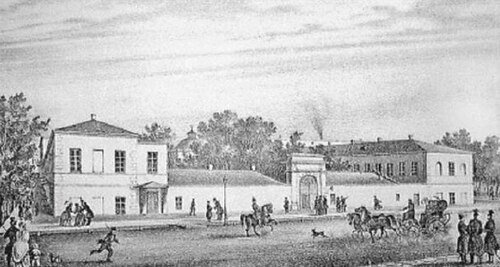
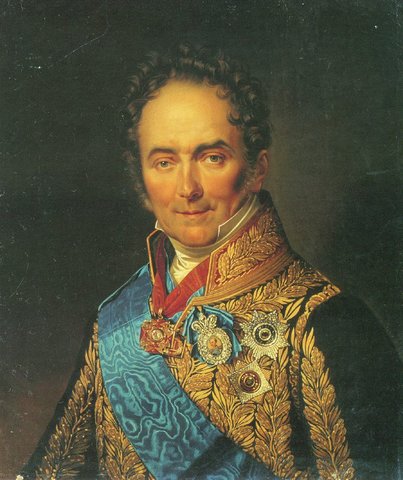
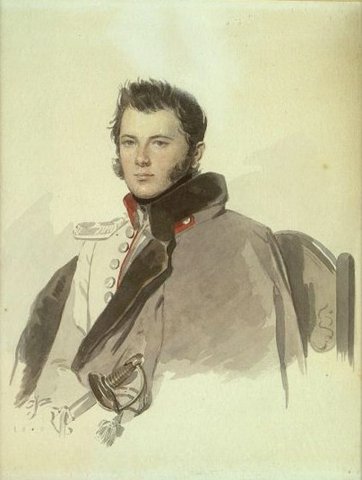
After his father's death, Lev Viktorovich Kochubey retired in 1837 with the rank of colonel and settled on the family estate of Dikanka, near Poltava: the same Dikanka that Nikolai Gogol made famous with his book of stories Evenings on a Farm Near Dikanka.
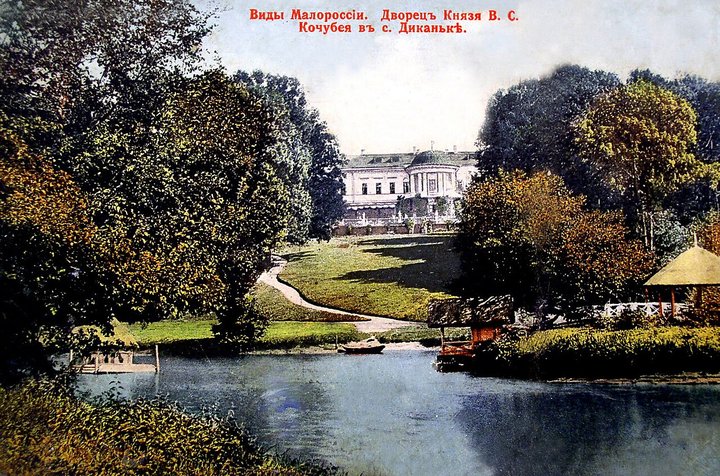
The Kochubeys were one of the great noble houses of the Empire, with vast landholdings in Ukraine. Managing their properties was a position of considerable trust for a young man of foreign origin.
It was during this period that Nikolai married Maria Zataevich (13-01-1824 / 2-05-1869), daughter of a prominent Ukrainian Cossack who was a chamberlain at court; they had nine children.
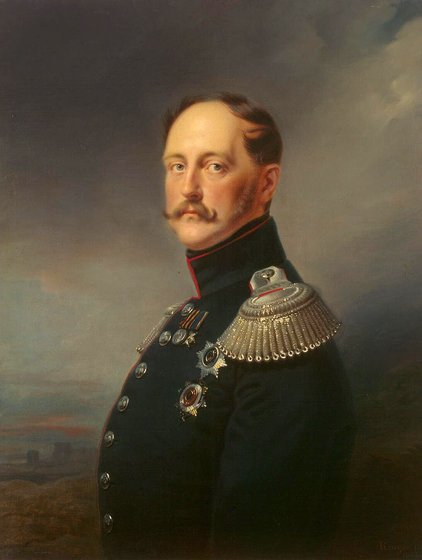
Nikolai distinguished himself as manager of the Kochubey family estate, which, together with his economic knowledge and his academic training, allowed him to move among the aristocracy closest to Emperor Nicholas I and his court.
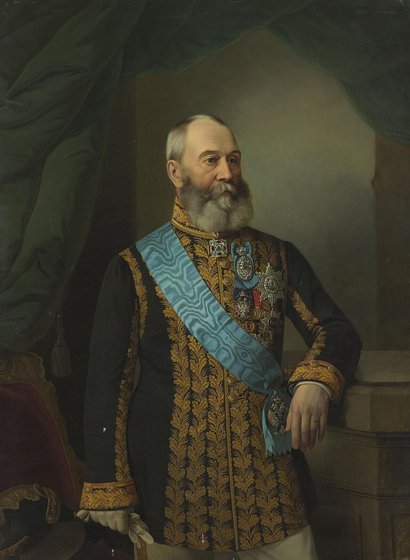
These connections took him to Saint Petersburg, where he worked as an economic analyst for the press and was appointed secretary to Prince Pavel Pavlovich Gagarin (1789-1872), who presided over the Committee of Ministers and the State Council and was one of the central figures in the abolition of serfdom (1861).
Perosio was his secretary for thirteen years: he was, quite literally, in the office from which Russia was governed, that of the Chairman of the Committee of Ministers. Before that he had been adviser and manager of the first factory of electroplating, casting and artistic bronze work (built between 1844 and 1846).
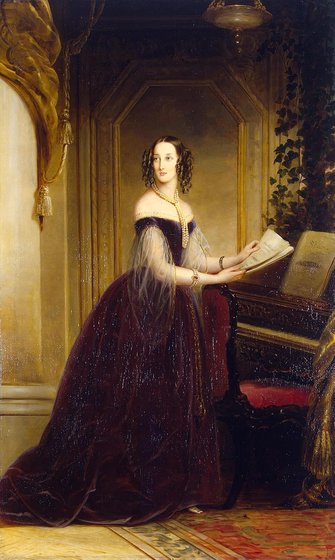
Its founder, Maximilian de Beauharnais, Duke of Leuchtenberg (1817-1852), son-in-law of the Tsar through his marriage to Grand Duchess Maria Nikolayevna of Russia, eldest daughter of Emperor Nicholas I (1796-1855), researched the artistic and practical applications of electroplating. The factory produced sculptures, doors and monumental details for Saint Isaac's Cathedral and the Winter Palace in Saint Petersburg, the copper horses of the Bolshoi Theatre in Moscow and the gilding of the domes of the Cathedral of Christ the Saviour.
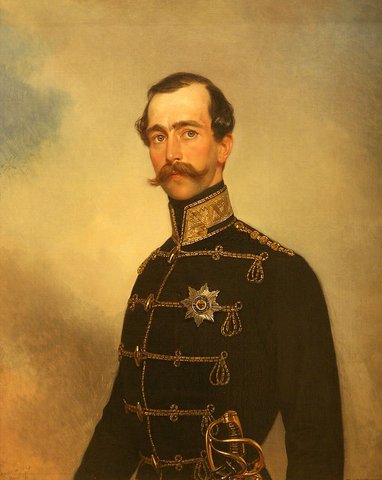
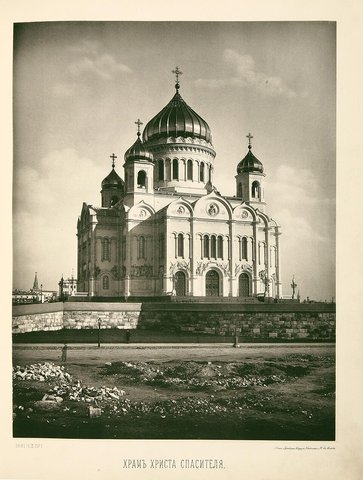
Years later, the plant became the property of the Main Society of Russian Railways, and its buildings were used by the Saint Petersburg Land Customs Office.
In recognition of his services to the Crown in managing this enterprise, and at the request of the Guardianship Commission for the Grand Duchess's children before the Committee of Ministers, he was granted the title of Honorary Hereditary Citizen on 29 May 1853.
In that period (1852-1853), because of serious illnesses, his mother and two of his sisters applied to the Ministry of the Interior for permission to travel to Italy in search of a milder climate and medical care, away from the harsh Russian winter.
In 1853, the Ministry of War signed a contract with the first-guild* merchant Perosio to supply the Kiev arsenal with the most modern mechanisms and machine tools for 256,000 roubles. Clause 4 of the contract stated: “Machines that the contractor is able to build with complete precision shall be manufactured in Russia; those that are not shall be ordered abroad” (source: article by Dmitri Korneichuk, “The Military Complex of Peter the Great”).
Rails were manufactured in southern Russia, on the banks of the Donets River, in the province of Yekaterinoslav, and Perosio sought to attract the attention of American mechanics who knew “how to smelt iron with anthracite coal”.
“Perosio also wanted to find out the price of machines in the United States so that he could order them there if necessary.”
The Crimean War (1853-1856) was a crucial conflict in the history of the Russian Empire: it marked a turning point that forced the country to acknowledge its backwardness compared with the Western powers.
After the humiliation of that war, in which the lack of railways made it impossible to move troops and supplies efficiently, Russia went through a railway fever.
After the death of Nicholas I, Alexander II (1855-1881) ascended the throne in 1855.
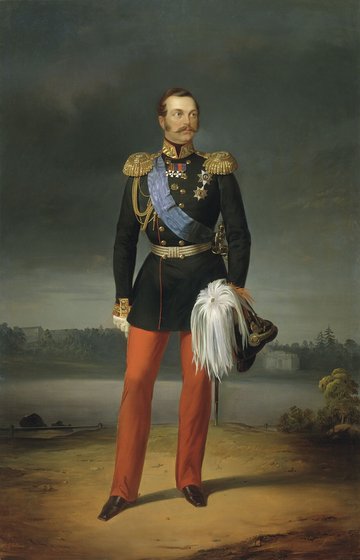
In December 1859, Nikolai took on the Russian Steam Navigation and Trading Company with articles in which he blamed its management for serious abuses and excessive tariffs to the detriment of the State.
The dispute could have gone on for a long time and, to put an end to the controversy, he proposed a public debate. Nikolai Pavlovich Perosio's opponent was Mr M. T. Smirnov.
The debate took place in the hall of the famous Passage shopping arcade in Saint Petersburg.
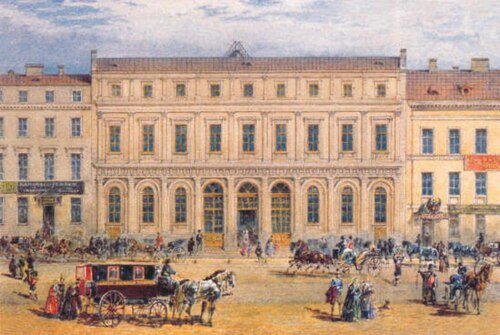
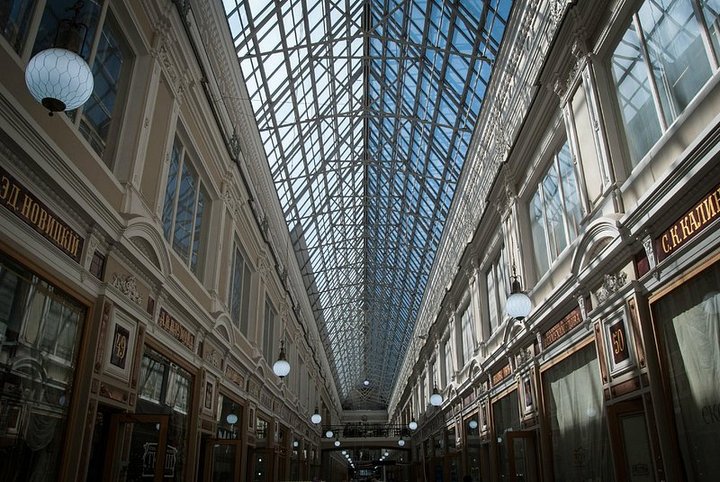
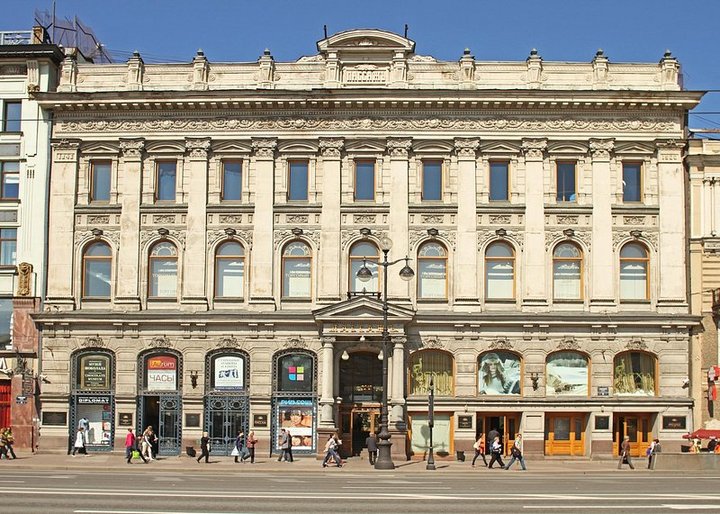
A large audience attended, drawn by the interest of the debate and by the novelty of the method of discussion.
The event caused a great sensation and was reported in many newspapers, including the important satirical magazine Iskra (The Spark).
Perosio did not speak as an ordinary citizen, but from a position of technical and administrative authority within the structure of the imperial family.
Some examples of what was published at the time: “An interesting passage in the history of the Russian tradition” (article by Mr T-nov in Sovremennik, 1859, no. 12, LXXVIII, pp. 403-422), “Mr Smirnov and Mr Perosio” (in Russkoe Slovo, 1860, no. 1, pp. 92-108), etc.
He was the author of numerous books and articles on financial and economic subjects, and a member of the Free Economic Society, in whose work he took an active part.
While he was serving as secretary, his wife, Maria Zataevich, died on 2 May 1869, leaving him a widower with two young children; shortly afterwards he married Louise Anderson.
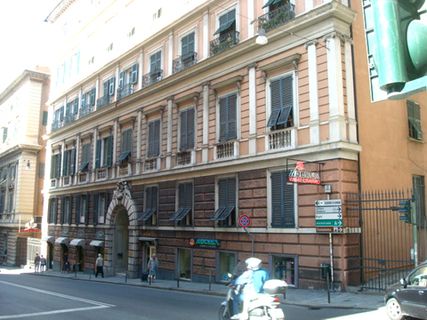
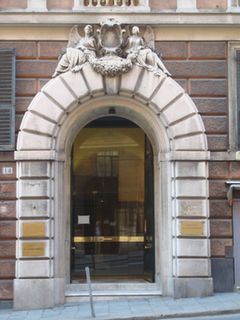
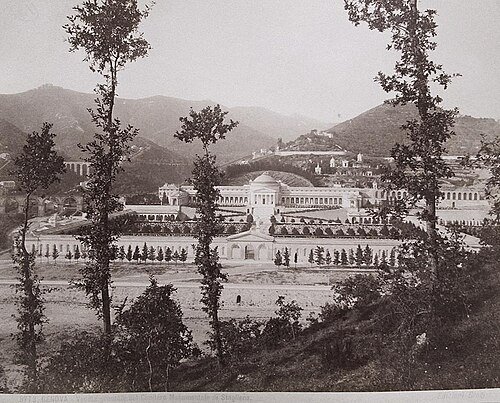
On Gagarin's death in 1872, various political problems led Nikolai Pavlovich Perosio to emigrate to Genoa with his second wife and two of his sons, Vassili and Ivan. There he bought a splendid residence at Via Assarotti 14, where he died on 27 May 1877. His remains rest in the Monumental Cemetery of Staglieno.
Some time later, his son Ivan returned to Saint Petersburg, while his brother Vassili settled permanently in Italy, where his descendants still live.
Bibliography and sources
Civil Registry of Genoa and Capri.
“Historia de la Rusia”, by Jean-Marie Chopin. Editores del Guardia Nacional, Imprenta del Guardia Nacional, 1839. From the Biblioteca de Catalunya. Digitised on 4 September 2008.
“Russia in the Nineteenth Century: Autocracy, Reform, and Social Change, 1814-1914”. By Alexander Polunov; edited by Thomas C. Owen, Larissa Zakharova and Marshall S. Shatz. Translated by Marshall S. Shatz.
Russkii biograficheskii slovar (Russian Biographical Dictionary), edited by A. A. Polovtsov, Saint Petersburg, 1896-1918, p. 562, entry “Perozio, Nikolai Pavlovich”.
Russian State Historical Archive (RGIA), fond 472, opis 35, delo 32: elevation of the merchant Perosio to Honorary Hereditary Citizen (1853).
Odessa documents (1852-1853): file on the Perosio family's departure abroad and baptismal record of Aleksandr Perosio.
Information provided by descendants of Ivan Nikolayevich Perosio.
Some of his newspaper articles:
- “Essay on Russian joint-stock companies”, St Petersburg 1859, 43 pp. (from Sankt-Peterburgskie Vedomosti 1859, nos. 191, 193 and 194).
- “The influence of publicity [glasnost, transparency] on Russian joint-stock companies”, St Petersburg 1860, 31 pp. (from Severnaya Pchela 1860, no. 139).
- “Review of the operations of Russian joint-stock companies in the past half-year and prospects for the future dividend”, St Petersburg 1860, 13 pp. (from Severnaya Pchela 1860).
- “To the shareholders of Russian companies on the occasion of the New Year”, St Petersburg 1860, 15 pp. (from Sankt-Peterburgskie Vedomosti 1860, no. 1).
- “Shareholder losses and their causes”, St Petersburg 1860, 51 pp. (from Severnaya Pchela 1860).
- “Balance sheet of joint-stock companies for 1861”, St Petersburg 1861, 12 pp. (from Severnaya Pchela 1861).
- “Protest against Mr Novoselsky's article ‘Comparison of the Russian Steam Navigation and Trading Company, the French company «Service maritime des messageries impériales» and the «Austrian Lloyd»’ (see Morskoi Sbornik 1859, no. 10)”, St Petersburg 1859, 21 pp. (from Sankt-Peterburgskie Vedomosti 1859, no. 230).
- “Reply to Mr Smirnov's article, published in no. 150 of the Shareholders' Journal, concerning the ‘Protest against Mr Novoselsky's article’”, St Petersburg 1859, 7 pp. (from Sankt-Peterburgskie Vedomosti 1859, no. 261).
These pamphlets sparked a controversy (see S. P. Karataev, Bibliography of Finance, nos. 3876-3878).