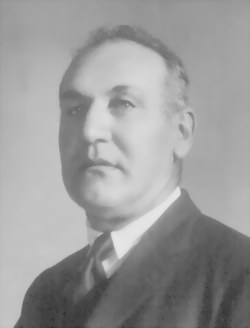
The Perossio Artola
Antonio Perosio (1849-1893), was son of Francesco Perosio and Luigia Bondanza, born in Ronco Scrivia, Genoa.
Ronco Scrivia has more than 200 years as a "Comune" but it has an almost millennial history, as testified by the name Ronco itself, from the medieval Latin "runcare", meaning to plow uncultured lands. The city is divided into two parts by the torrent Scrivia, the freeway and the railway. Ronco presents as a great expanse of low houses among moderately high hills: the highest is Monte Reale (902 meters).
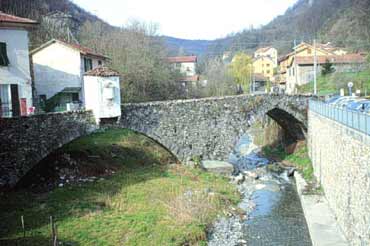
The oldest part of the city is Villavecchia, recognized for the typical houses built close together. In this area we find a Roman bridge and the Vía Postumia that in a time Genoa united with Aquileia going by Libarna whose excavations today they constitute the main archaeological place of the Under Piamonte...
For the lack of possibilities of progress in his homeland, perhaps motivated by the previous departure of family members toward South America, (See The first Perosio in the "Río de la Plata"), he decided shortly after to also emigrate to Uruguay, settling in the Department of Artigas, in the north of the Oriental Republic of Uruguay.
In Italy they were their parents and siblings Stefano Celestino and Rosa... Almost fifty years later sons of Stefano Celestino (Antonio's brother) they would emigrate to Buenos Aires, Argentina…
Artigas is one of the departments of Uruguay, in the northwest of the country. Limit to the north and the east with the Brazilian frontier, to the west with Argentina by means of the river Uruguay, and to the south with the department of Salto. Inside a country plain, is dominantly a department of hills or plateaus (snub), of volcanic, basaltic lavas, of Jurassic and cretacic age, whose back gives a soft slope toward the river Uruguay, while to the east it presents a clipped front. In her some alignments of mountains denominated kitchen knives rise (kitchen knives of Nativity, of Yacaré, of Tres Cruces and Sepulcro), among those that prepare other so many valleys for where streams reflect (Itacumbú, Naquiná) and the river Arapey that will give to the river directly Uruguay, and others to the Cuareim river that serves as Brazilian frontier.
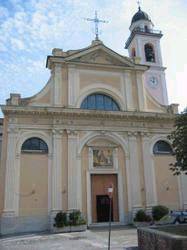
In August of 1847 it had arrived to Artigas the Uruguayan general Diego Lamas you Lick who settles later at the moment in "Tres Cruces" and few months in the Step of the department of Big Cuaró to stop the frequent territorial intrusions of the Brazilian baron Yacuhy.
For that time a called basque Vicente Saralegui that passed to occupy absent proprietors' lands located among the stream Cuaró and the river Arapey also arrives.
It is possible that Saralegui commented to a called young basque José Artola Martinicorena clerk in Montevideo in the company Taranco, the sale of fields in the place.
José Artola acquired in 1870 one of those fields installing a called ranch Cuaró.
Murdered Vicente Saralegui cruelly, they continued the exploitation their sons Zacarías, Lorenzo and Miguel Saralegui and arrived of Spain their son-in-law José López Saralegui, solved to establish a society with José Artola proprietor of the ranch Cuaró called Artola-Lopez Saralegui.
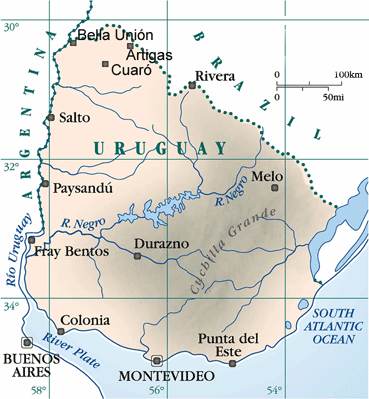
Cuaró was the point forced for where they passed most of the merchandises in commercial traffic with Brazil.
José Artola Martinicorena as one of the first farmers of Artigas that worried about the improvement of the races of sheep, import from 1884 valuable exemplary merino Vermonth from United States. Some years later their ranchs and mainly the renowned ranch Cuaró, provided from reproducers to cattlemen of the Uruguayan north.
The quality of the wools that they gathered was recognized in Europe to where they exported, remitting it with the label of Wool of Cuaró or Merino Cuaro, the one that produced bigger percentage in the hairstyle due to its looseness that that of the rest of Uruguay.
José Artola was a progressive man that knew how to administer his cattle production, stimulating and rewarding collaborators that he brought of Basque counties, enabling them according to habit.
The society didn't only bring manpower qualified in the sheep breeding, mainly arrival from the villages of Errazquin, Inza and Betelú; it also claimed the presence of Basque youths as women for service of their families, but with the main objective of achieving marriages among the Basque immigrants.
Antonio Perosio (1849-1893) settles down before in the area like blacksmith in the ranch mentioned, there he knows one of José Artola Martinicorena sisters, named Fermina Artola Martinicorena, born in Errazquin Basque country with who marries in the church of Santa Rosa's population, current "Bella Union", November 23, 1875 and it dies February 8, 1893 in Yucutujá, Depto. de Artigas.
They had five children:
Footnotes: For characteristic of the epoch errors, the last name had deformed and his recorded descendants as Perossio.
-
Francisco Perossio Artola (1876-1939), a landed man, married with Josefa Beraza Artola, in Errazquin, Basque Country; they had 9 children: a) Francisco; b) Felipe; c) Josefa; d) Elena; e) María; f) Rosa; g) Ema; h) Nieves and i) Juan Perossio Beraza.
-
Maxima Perossio Artola (1878-1970), married with Aquiles Lucini Manani March 23 1899 in Cuaró, 9 children: a) Camilo; b) Fermina, c) Victorio; d) María; e) Casimiro; f) Crispín; g) Ursula; h) Antonio and i) Julio Lucini Perossio.
-
Petrona Perossio Artola, born in 1880, married with Miguel Soravilla Ochonarena, 7 children: a) Juan; b) Severina; c) Demetrio; d) María; e) Francisca; f) Benito and g) Miguel Soravilla Perossio.
-
Luisa Perossio Artola born July 27, 1882, married with Pablo Riva, one child.
-
Fermina Perossio Artola, born May of 1885, 12. Married in 1906 Maximo Severino Ramos.