Giorgio Perosio
During the Soviet Civil War (1918-1922) the “Red Army”, formed by communists and revolutionaries in power, faced the “White Army”, composed of conservatives and liberals favorable to the monarchy and socialists opposed to the Bolshevik revolution, together with the United Kingdom and France (The Triple Entente).
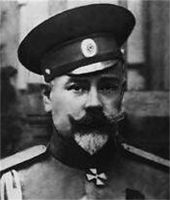
Giorgio Perosio son of Alessandro, journalist and correspondent of the agency Osvag worked in the Kuban region accompanying the “White Army”, first that of the rebel general Anton Ivanovich Denikin, and then since the spring of 1920 that of the czarist baron Pyotr Nikolaevich Wrangel until his defeat and flight in November of 1920.
Giorgio was arrested and condemned to prison on December 12, 1924, and sent to the Prison of Solovki.
Solovki is a shortened name for the Solovetsky Islands, White Sea, Russia.
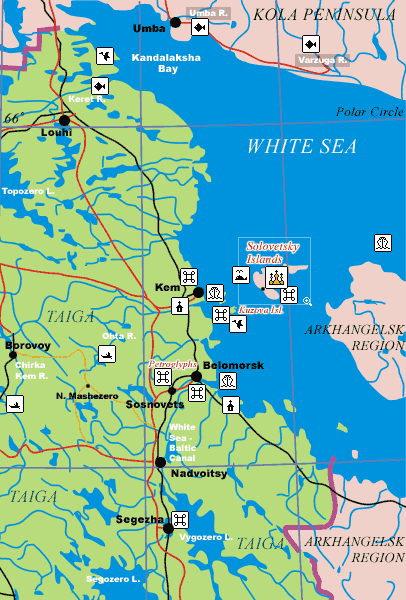
Solovetsky Archipelago is situated in the western part of the White Sea, less than 100 miles from the Polar Circle, and consists of 6 big and many small islands. The biggest is the Greater Solovetsky Island, on which the sadly famous medieval monastery stands.
Historically it has been a location of the famous Russian Orthodox Solovetsky Monastery Complex, which repelled foreign attacks during the Time of Troubles, the Crimean War, and the Russian Civil War.
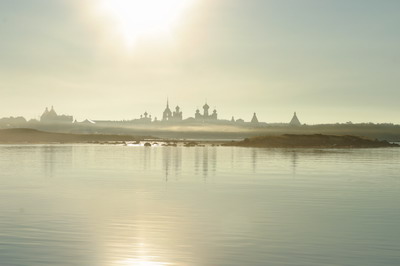
Solovetsky Monastery was founded in the late 1420s by monks Gherman and Savvatiy of Kirillo-Belozersky monastery.
It was one of the first “corrective labor camps”, a prototype of the Gulag system.
After the Bolshevik Revolution, the Soviet authorities closed down the Monastery and incorporated many of the buildings into Solovki, one of the earliest forced-labor camps of the Gulag during the 1920s and 1930s.
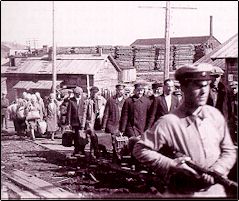
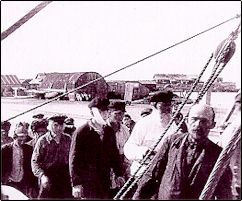
The camp was mainly used for cutting trees, and when the trees were gone, the camp was closed.
In a note to the Society for Aid to Political Prisoners of the Red Cross (in the archive of the library of the Monastery, former Prison of Solovki), he demanded aid:
I am Italian, relative of the Perosio composer and the journalists Giovanni and Giulio Perosio. I extremely need dress (the clothing absolutely was torn), and underclothes, I can eat but I need citric acid, as an anti-scurvy measure.
I follow in Solovki by three years and I do not have money, request to ask for before the Italian Consulate aid and on the warning to my relatives in Italy, in Rome or Genoa. I have been condemned because in 1919 served at army of general Denikin in cable agency. I was of profession journalist .
Georgiy Perosio.
In 1928 he appeals to the Red Cross and obtains a reduction of his sentence.
Sources:
Document strokes from the following files : Gosudarstvennyj Archiv Rossijskoj Federacii (Moscow) GARF f. 8409, op.1 d. 77.
Bibliography.
1.-“Reflections on the Gulag”
With a documentary appendix on the Italian victims of repression in the USSR
Authors: Elena Dundovich, Francesca Gori, Emanuela Guercetti.
2.-“Gulag - Storia e memoria”
Editori: E. Dundovich, F. Gori, E. Guercetti
Editorial Feltrinelli Editore IT
http://www.solovki-monastyr.ru/biblioteka011.htm