The first Perosio in the "Río de La Plata"
19th Century Italy
The Italy of the 18th century was divided into small independent Principalities and submitted in part to the foreign domination.
In 1720, Vittorio Amadeo II of Saboya was elected king of Sardinia. but, after the War of Austrian Succession, assumed Carlo Emanuele III (1730-1773) who increased the economic and territorial power of his kingdom.
After Napoleon's fall, Europe suffered important territorial changes that permitted Italy to recover some regions.
In 1831, Carlo Alberto (1798-1849), succeeded his father Carlo Emanuele king of Sardinia and becomes the new king.
The Perosio Family in Sarissola
For these years the family of Luigi (Luis) Perosio (1804-1868) and Anna Parodi (1814-1879) lived in the county of Genoa (Italy) in the denominated "Alta Valle Scrivia", near (18 miles) to the city of Genoa.
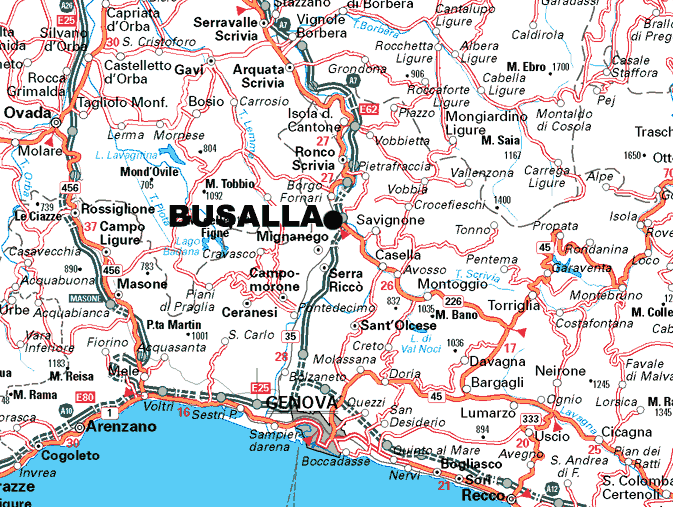
About 1835 Luigi Perosio married Anna Parodi and between 1836 and 1844, they had three children: Giovanni, Angelo and Pasquala.
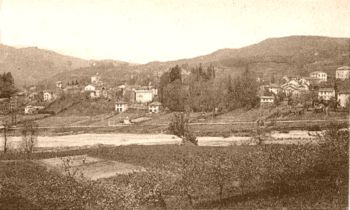
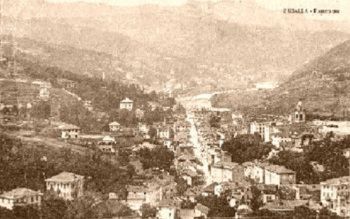
They were farmers in Sarissola, suburb of Busalla where they resided and their children were born.
From Busalla crossing the bridge on the river Scrivia, under the road, one arrives at the neighborhood of Prele and continuing along the road that rises for a brief while one arrives at the old suburb of Sarissola.
The Crisis and Unification
Between 1846 and 1847 a serious economic crisis in Italy due to the increase in the industrial production was originated contrasted with the scarce purchasing power of the population.
The king Carlo Alberto, in effort to rescue Lombardia and Venice, declared the war to Austria in 1848 and he had to abdicate in 1849, soon after the defeat of Piemonte against Austria in the battle of Novara, march 23 of 1849.
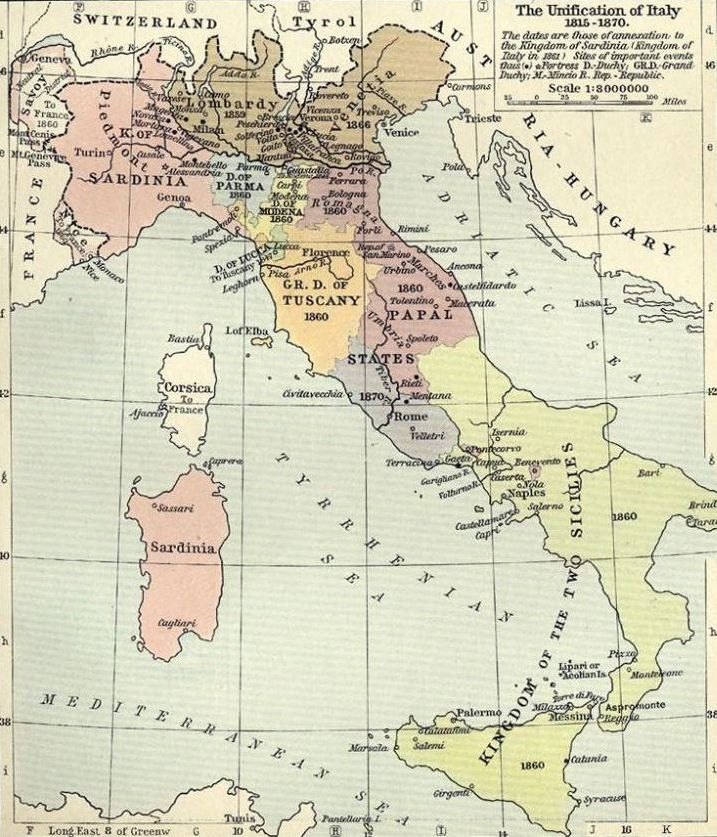
From: Shepherd, William. Historical Atlas. New York: Henry Holt and Company, 1911.
The farming was found technically delayed and the production was scarce, the prices rose rapidly and the shortage was produced.
Many industries were declared in bankruptcy, enlarging the unemployment and plunging in the poverty to great part of the company and in 1847 the plague added to the calamities.
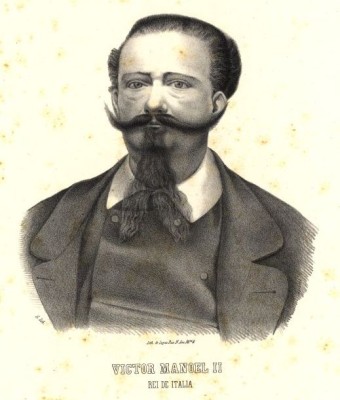
That same year he was succeeded by his son, Vittorio Emanuele II (1820-1878) king of Sardinia, who in 1859 would recover to Lombardy after the Austrian rout in Magenta by the French of Napoleon III.
Angelo Perosio Perosio (1839-1909) marries with Caterina Poggi (1836-1921) daughter of Tommaso, in the church San Giorgio of Sarissola June 10, 1858.
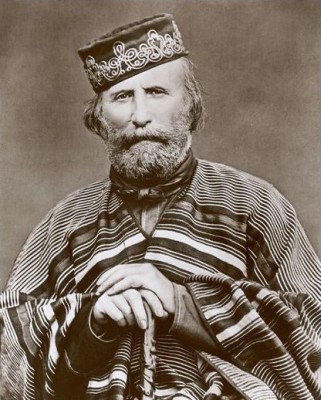
On 7 September 1860, Giuseppe Garibaldi entered victorious in Naples, and 8 months later, in answer to the popular clamor, named Vittorio Emanuele as constitutional King.
Emigration to Rio de La Plata
The poverty and unemployment decided a fundamental change among the Italians, that tried a change of life and a different possibility to do well to emigrate.
Around 1861, months away from Italian unification by king Vittorio Emanuele, Luigi Perosio and his wife Anna accompanied their children on their trip to America.
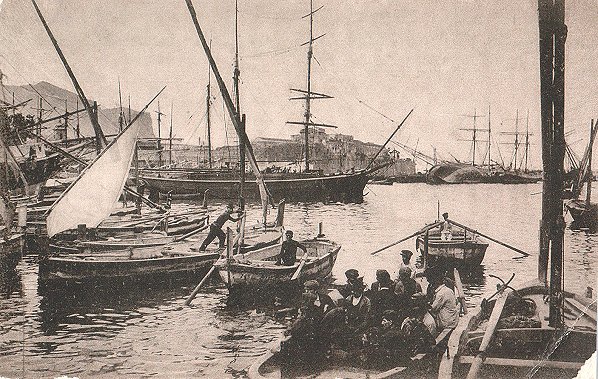
They left the port of Genoa and after two months of travel they arrived at the river "Río de La Plata".
By motives ignored, Angel decides to be situated in Rosario, province of Santa Fe, Argentina. See The Perosio from Argentina
Giovanni (Juan) and Pasquala and their parents settled in Paysandú Uruguay, where Giovanni (Juan) married years later Rosa Semino and Pasquala married José Barchi. See The Perosio from Uruguay.